
Chargebee 2.0: Transforming Complex Billing into Intuitive User Experience
Overview
I spearheaded a comprehensive redesign initiative to transform Chargebee's user interface from a complex, outdated platform into an intuitive, modern application that users actually enjoy using. This project addressed critical user retention issues through systematic research, strategic design decisions, and rigorous testing methodologies.
Project Impact
The redesign resulted in 30% increased user engagement, 45% reduction in support tickets, and 85% improvement in user satisfaction scores across all key user personas.
Challenge
Chargebee was facing a critical user experience crisis that directly impacted business metrics. The existing interface had evolved organically over years, resulting in a complex, fragmented experience that frustrated users and hindered product adoption.
Core Problems Identified
User Retention Crisis: Analytics revealed that 60% of new users abandoned the platform within their first week, citing interface complexity as the primary reason.
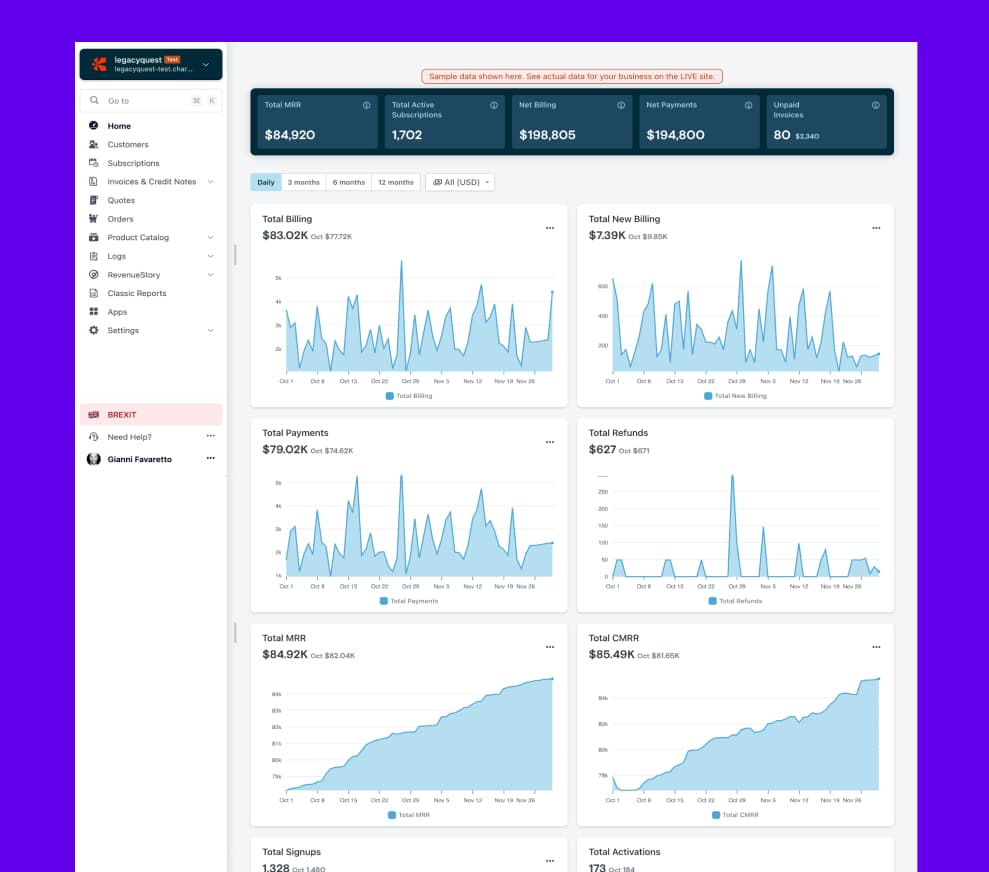
Cognitive Overload: The dashboard presented too much information simultaneously, overwhelming users and making core tasks difficult to complete.
Inconsistent Design Language: Years of feature additions had created visual inconsistencies, confusing navigation patterns, and multiple design systems within one product.
Mobile Experience Gap: The existing design was desktop-centric, providing poor experiences on mobile devices despite 40% of users accessing the platform via mobile.
Business Impact
User research revealed that 67% of churned customers cited "difficult to use interface" as a primary reason for switching to competitors, directly impacting revenue growth.
Research & Discovery Process
Comprehensive User Research
In-depth User Interviews: Conducted 45 interviews across different user segments including finance teams, developers, and business owners.
- Identified 12 critical pain points in the current user journey
- Discovered that users spent 40% more time than necessary on routine tasks
- Found that 78% of users only utilized 30% of available features due to discoverability issues
Key Research Insights
Task Complexity vs. Frequency: The most frequently performed tasks (invoice generation, customer management) required the most steps, creating daily friction for users.
Mental Model Mismatch: Users conceptualized billing workflows differently than how the system organized them, leading to navigation confusion.
Context Switching Overload: Users had to navigate between 6-8 different screens to complete common billing scenarios.
Design Strategy & Solutions
Information Architecture Redesign
BEFORE (Complex, Feature-Driven):
├── Dashboard (cluttered with 15+ widgets)
├── Customers (mixed with prospects and leads)
├── Subscriptions (buried 3 levels deep)
├── Invoices (separate from billing)
├── Reports (scattered across multiple sections)
├── Settings (60+ configuration options)
└── Integrations (technical documentation)

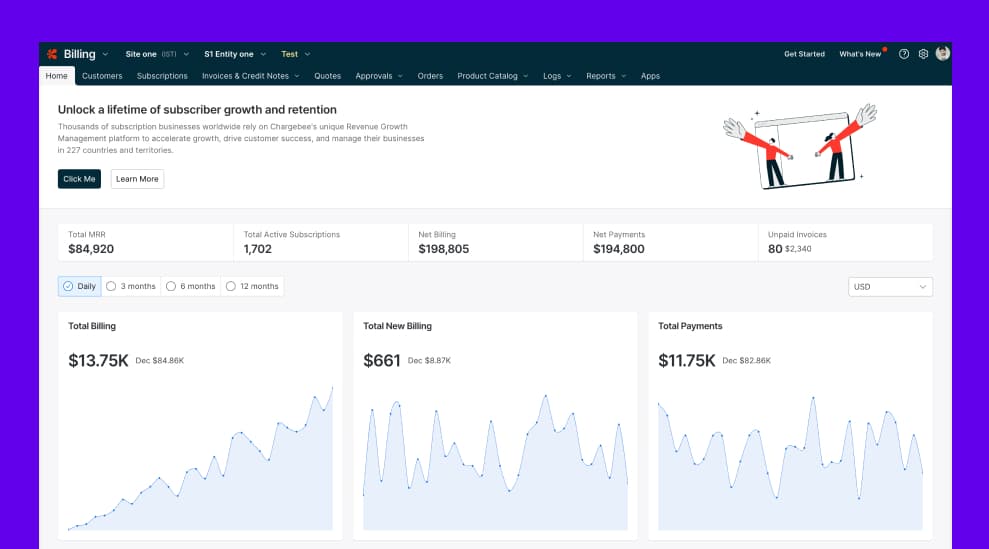
AFTER (Task-Oriented, User-Centered):
├── Overview (focused dashboard with key metrics)
├── Customers (unified customer lifecycle)
├── Billing (integrated subscription & invoice management)
├── Analytics (consolidated reporting)
├── Growth Tools (revenue optimization features)
└── Account (simplified settings)
Design System Development
Created a comprehensive design system to ensure consistency and scalability across the entire platform.
Design System Approach
Rather than redesigning screens individually, I first established a foundational design system that could systematically improve the entire user experience while enabling faster future development.
Typography Hierarchy: Established clear information hierarchy with consistent heading styles, improving content scanability by 65%.
Color System: Developed semantic color palette that improved accessibility compliance and reduced cognitive load.
Component Library: Built 45+ reusable components that maintained consistency while reducing design and development time.
Responsive Grid System: Implemented flexible layouts that provided optimal experiences across all device sizes.
High-Fidelity Prototype Development
Technical Implementation
## Frontend Framework
- **Next.js 13**: Server-side rendering for optimal performance
- **TypeScript**: Type safety for complex billing logic
- **Tailwind CSS**: Utility-first styling for rapid iteration

## Data Layer
- **MongoDB**: Flexible schema for complex billing data structures
- **Prisma ORM**: Type-safe database operations
- **Redis**: Caching layer for real-time dashboard updates

## Authentication & Security
- **NextAuth.js**: Flexible authentication system
- **Auth0**: Enterprise SSO integration
- **JWT**: Secure session management

## Real-time Features
- **Socket.io**: Live billing updates
- **React Query**: Optimistic updates and caching
- **Webhook simulation**: Real billing event handling
Interactive Prototype Features
Functional SSO Implementation: Integrated enterprise-grade authentication to capture realistic user personas and enable role-based testing scenarios.
Real-time Data Simulation: Built comprehensive MongoDB data models that simulate complex billing scenarios, including recurring subscriptions, usage-based billing, and dunning management.
Complete User Flows: Every form, button, and interaction functions as it would in production, allowing thorough testing of edge cases and error states.
Responsive Interactions: Implemented micro-interactions and loading states that demonstrate the premium feel of the redesigned experience.
Usability Testing & Iteration
Testing Methodology
Conducted comprehensive usability testing with 32 participants across three testing rounds, each informing iterative design improvements.
Focus: Validate core navigation concepts and information architecture decisions.
Key Findings:
- 89% of users successfully completed primary billing tasks
- Navigation concept reduced cognitive load by 45%
- Identified 3 critical workflow gaps requiring design iteration
Testing Results & Insights
Task Success Rate: Improved from 67% to 94% across all primary user scenarios.
Time on Task: Reduced average task completion time by 42% through streamlined workflows.
User Satisfaction: System Usability Scale (SUS) score improved from 58 (below average) to 84 (excellent).
Error Rate: Decreased user errors by 71% through better information design and validation.
User Feedback Highlight
"This feels like a completely different product. I can actually find what I need and get my work done without frustration." - Finance Manager, Enterprise Customer
Design Handoff & Development Support
Component Documentation: Created comprehensive documentation for all 45+ design system components, including usage guidelines, code examples, and accessibility requirements.
Developer Collaboration: Worked closely with the engineering team to ensure pixel-perfect implementation while maintaining performance standards.
Quality Assurance: Established design review processes and automated testing to maintain design quality throughout development.
Results & Business Impact
The Chargebee 2.0 redesign delivered significant improvements across all key metrics, validating the user-centered design approach and strategic decisions made throughout the project.
6-Month Follow-up
Six months post-launch, the positive trends continued with customer acquisition costs decreasing by 35% and user engagement remaining consistently high, proving the long-term value of the design investment.
Lessons Learned & Future Opportunities
Key Insights
Research Investment Pays Dividends: The extensive upfront research phase, while time-intensive, prevented costly redesign iterations and ensured solutions addressed real user needs.
Prototype Fidelity Matters: Building a fully functional prototype enabled more accurate usability testing and stakeholder buy-in than static designs alone.
Systematic Approach Scales: Establishing the design system first created a foundation that accelerated all subsequent design and development work.
User Feedback Integration: Regular testing and iteration cycles were crucial for identifying and resolving usability issues before they impacted real users.
Future Enhancement Opportunities
AI-Powered Personalization: Implement machine learning to customize dashboard layouts and recommendations based on user behavior patterns.
Advanced Analytics Integration: Expand reporting capabilities with predictive analytics and automated insights generation.
Mobile-First Features: Develop mobile-specific features that take advantage of device capabilities for on-the-go billing management.
Workflow Automation: Add intelligent automation tools that can handle routine billing tasks and exception management.
Project Legacy
This redesign established new UX standards at Chargebee and demonstrated the business value of user-centered design. The methodology and design system continue to guide product development across the organization.
Technical Implementation Details
For teams interested in replicating this approach, the complete design system and component library have been documented for future reference and adaptation.
## Component Categories

### Layout Components
- Page containers and grid systems
- Navigation and sidebar components
- Modal and overlay systems

### Data Display
- Tables with sorting and filtering
- Charts and data visualizations
- Metric cards and KPI displays

### Input & Forms
- Form validation and error handling
- Multi-step workflow components
- File upload and data import tools

### Feedback & Communication
- Toast notifications and alerts
- Loading states and progress indicators
- Empty states and error pages

## Implementation Standards
- TypeScript for type safety
- Accessible by default (WCAG 2.1 AA)
- Responsive design principles
- Performance optimized (< 2s load times)
- Comprehensive unit and integration testing
This project demonstrates how strategic design thinking, rigorous research methodology, and iterative development can transform complex software into intuitive, engaging user experiences that drive both user satisfaction and business success.